
Have you noticed tiny white flakes on your dog’s coat or bedding when you give them a cuddle? Perhaps their skin looks drier than usual, or they have started scratching more often. Dog dandruff can become more noticeable in winter, when cold weather and dry indoor air draw moisture from the skin. However, the weather is not always to blame. Diet, grooming habits, allergies, parasites and underlying skin conditions can all play a part. Understanding what is causing those flakes is the first step towards keeping your dog’s skin comfortable and their coat healthy through the colder months.
Why Does Dog Dandruff Get Worse in Winter?
Dog dandruff often gets worse in winter because cold air and low humidity draw moisture out of the skin, so old skin cells flake off more visibly. Room heaters, which many homes switch on in the colder months, can dry the indoor air even further. Frequent bathing or unsuitable grooming products can add to the problem by stripping away the skin’s natural protective oils.
Dog dry skin in winter usually shows up as small white flakes scattered across the coat, particularly along the back and around the base of the tail. Some dogs also have a dull coat or dry-looking skin. Others develop greasy flakes, redness or persistent itching, which suggest something more than dry air.
A few flakes do not necessarily indicate a serious problem, but noticeable or recurring dandruff deserves attention. If your dog is scratching excessively, losing hair or developing sore patches, arrange a veterinary check rather than assuming that winter dryness is the only cause.
What Causes Dandruff in Dogs?
Dandruff in dogs appears when skin cells shed faster or more visibly than normal, and the trigger can be environmental, nutritional or medical. The skin naturally sheds old cells, so there is no single explanation for every case.
Common causes of dog dandruff include:
- Dry air and low humidity: Cold weather and indoor heating can dry out the skin, making flakes more noticeable.
- Nutritional imbalances: A diet that does not provide the right balance of essential fatty acids, protein, vitamins and minerals may affect skin and coat health.
- Allergies and sensitivities: Environmental allergens or food allergies can cause skin irritation, itching and flaking.
- Parasites: Fleas and certain mites can irritate the skin. Cheyletiella mites cause a condition nicknamed “walking dandruff”, with scaling often seen along the back, and it needs veterinary treatment. If you suspect fleas, read our guide on how to get rid of fleas on dogs.
- Skin infections: Bacterial or yeast infections may cause scaling, redness, itching, an unpleasant smell or changes in the coat.
- Underlying medical conditions: Vets often call excessive scaling seborrhoea. In most dogs it is secondary to another problem, such as allergies or a hormonal disorder, and it can lead to persistent dandruff.
The appearance of the flakes alone cannot confirm the cause. If the problem continues despite sensible grooming and environmental changes, your vet can examine the skin and recommend appropriate treatment.

Dog Dandruff and Diet: What Should Your Dog Eat?
A complete and balanced diet, with enough quality protein, the right balance of omega-3 and omega-6 fatty acids, and key vitamins and minerals, helps keep your dog’s skin healthy and coat shiny. Skin cells need a steady supply of nutrients, and the coat depends on adequate protein to grow and stay in good condition.
Food formulated for your dog’s life stage is a sensible starting point. Rather than adding several supplements or switching foods as soon as you notice flakes, look at the overall quality and suitability of their current diet.
Essential nutrients for healthy skin and coat:
- Protein: Provides the amino acids needed for skin maintenance and hair growth. A nutritionally appropriate diet should supply enough high-quality protein for your dog’s age and needs.
- Omega-3 and omega-6 fatty acids: Help maintain the skin’s protective barrier and support coat health. The balance matters, so speak to your vet before adding fish oil or other fatty acid supplements. Oily fish such as sardines are a natural source of omega-3s, and our dehydrated sardines can be offered as an occasional treat, counted within your dog’s daily treat allowance.
- Vitamins and minerals: Nutrients such as zinc and vitamins A and E contribute to normal skin function. Too much can be harmful, which is why a balanced diet is preferable to adding individual nutrients without guidance.
- Water: Good hydration supports normal body functions, including skin health. Keep fresh drinking water available at all times, even when your dog seems less thirsty in winter. For dogs that drink little, a dog-safe broth such as our Turkey Broth poured over meals adds extra moisture.
If your dog still has dry, flaky skin despite eating a complete diet, the cause may not be nutritional. Allergies, parasites and medical conditions can cause similar signs and may need targeted treatment.
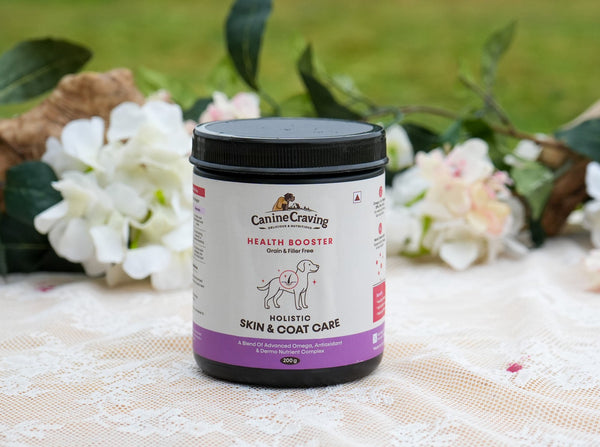
If your vet agrees that extra skin support suits your dog, a targeted supplement can complement a balanced diet. Our Holistic Skin & Coat Care Supplement combines an omega 3-6 blend from algal oil and cold-pressed flaxseed with marine collagen, biotin and zinc, and mixes easily into home-cooked meals or kibble.
Winter Coat Care: Simple Habits That Help
Good grooming helps remove loose flakes, spreads natural oils through the coat and makes it easier to spot changes in your dog’s skin. The aim is to keep the coat clean and comfortable without stripping away its natural protection.
A few simple habits can make a difference:
- Brush regularly: Choose a brush suited to your dog’s coat type and brush gently to remove loose hair and flakes.
- Avoid over-bathing: Bathing too often can worsen dryness. Use lukewarm water and a suitable dog shampoo when a bath is needed.
- Keep the sleeping area comfortable: Wash bedding regularly, and keep your dog away from very dry, dusty or smoky spots, including right beside a room heater.
- Maintain hydration: Keep fresh water within reach throughout the day.
- Check the skin regularly: Look for redness, greasy patches, unusual odours, hair loss or signs of persistent scratching.
These habits support everyday skin care, but they will not resolve every cause of dandruff. If your dog’s skin becomes more irritated or the flakes keep returning, seek veterinary advice.
Anti Dandruff Shampoo for Dogs: What Should You Choose?
The right anti dandruff shampoo for dogs depends on what is causing the flakes. A mild, dog-specific shampoo may suit simple dryness, while infections, greasy scaling or other skin conditions usually need a medicated shampoo recommended by your vet.
Avoid using human anti-dandruff shampoos unless your vet specifically advises otherwise. Products made for people may contain ingredients that are unsuitable for dogs, and the wrong shampoo can aggravate an already irritated skin barrier.
If your dog needs frequent baths, has greasy scaling or keeps developing flakes after grooming, ask your vet which product is appropriate. Use medicated shampoos exactly as instructed, including how often to bathe and how long to leave the lather on before rinsing.
Dog Dandruff Treatment: Comparing Common Causes and Approaches
The most effective dog dandruff treatment depends on the underlying cause. Simple environmental dryness may improve with changes to the home and grooming routine, while parasites, infections and allergies need more specific care. The table below summarises common possibilities and the right next step.
| Possible cause | Signs to look for | Recommended approach |
|---|---|---|
| Dry air and winter conditions | Fine, white flakes and dry-looking skin | Review bathing habits, keep the indoor environment comfortable and monitor the skin |
| Nutritional imbalance | Flaking or a dull coat, sometimes alongside other signs of poor health | Review the complete diet and discuss nutritional changes with your vet |
| Allergies or sensitivities | Itching, redness, licking or recurrent skin irritation | Arrange a veterinary assessment to identify possible triggers |
| Parasites | Flaking with itching, scratching or visible skin irritation | Seek veterinary advice on parasite identification and treatment |
| Skin infection or another medical condition | Greasy flakes, unpleasant odour, hair loss, sores or persistent scaling | Arrange a veterinary examination for diagnosis and targeted treatment |
These signs can overlap, so treat the table as a general guide rather than a way to diagnose your dog at home. Persistent or worsening symptoms should always be assessed by a vet.
How to Get Rid of Dog Dandruff Safely
To get rid of mild dog dandruff safely, start with the basics: bathe less often, switch to a gentle dog shampoo, brush regularly and make sure your dog’s food is complete and balanced. If the flakes persist after a few weeks of these changes, see your vet.
Avoid trying several new products at once. Introducing multiple shampoos, supplements or diet changes together makes it hard to tell what is helping and may aggravate sensitive skin.
If the dandruff does not improve, or your dog develops itching, redness, hair loss, an unpleasant smell or sore patches, book a veterinary appointment. Depending on the findings, your vet may recommend skin tests, parasite treatment, a diet review or a medicated shampoo.
Seek advice sooner if symptoms appear suddenly, become severe or affect several pets in the household. Some causes of dog flaky skin, including certain mites and infections, can spread between animals, and Cheyletiella mites can also cause temporary itchy skin in people.
Healthy Skin Starts With the Right Care
Dog dandruff in winter can be linked to dry air, grooming habits, nutrition or an underlying skin condition. The best approach is to look beyond the visible flakes and consider your dog’s overall skin health, diet and daily environment.
Regular brushing, sensible bathing and a complete, balanced diet support a healthy coat. If the dandruff keeps returning or comes with itching, redness or hair loss, seek veterinary advice rather than relying on shampoo or home remedies alone. With the right care, your dog can stay comfortable through winter and beyond.
Frequently Asked Questions About Dog Dandruff
Is dog dandruff normal in winter?
A small amount of flaking can happen when the air is dry, but noticeable or persistent dandruff should not automatically be blamed on winter. If your dog is itchy, losing hair or developing red or sore skin, consult your vet.
What causes dandruff in dogs even when they eat well?
A balanced diet supports skin health, but it cannot prevent every skin problem. Dry air, allergies, parasites, infections and underlying medical conditions can all cause dandruff in dogs that eat well.
Can I use anti-dandruff shampoo made for humans on my dog?
No, not unless your vet specifically recommends it. Human shampoos may contain ingredients that are unsuitable for dogs or that worsen skin irritation. Choose a dog-specific product suited to your dog’s condition.
Can changing my dog’s diet help with dry, flaky skin?
It may help if the current diet is nutritionally inadequate or unsuitable for your dog. Dandruff has several possible causes, though, so changing food alone may not solve it. Speak to your vet before making major diet changes or adding supplements.
When should I take my dog to the vet for dandruff?
Book a vet visit if the flakes persist, worsen or appear alongside excessive scratching, redness, hair loss, greasy skin, an unpleasant smell or discomfort. Your vet can identify the cause and recommend the right treatment.


