

Canine Craving
Pork Ear for Dogs (Dehydrated) - 2 Pieces
Pork Ear for Dogs (Dehydrated) - 2 Pieces
Couldn't load pickup availability
Benefits
- Species Appropriate
- Dental Health
- Mental Stimulation
- Bone and Joint care
Description
Description
Most dog chews are chosen because they are labelled tasty or long-lasting. But have you ever paused to ask what your dog is actually gaining from that chew?
That question changes how you look at treats.
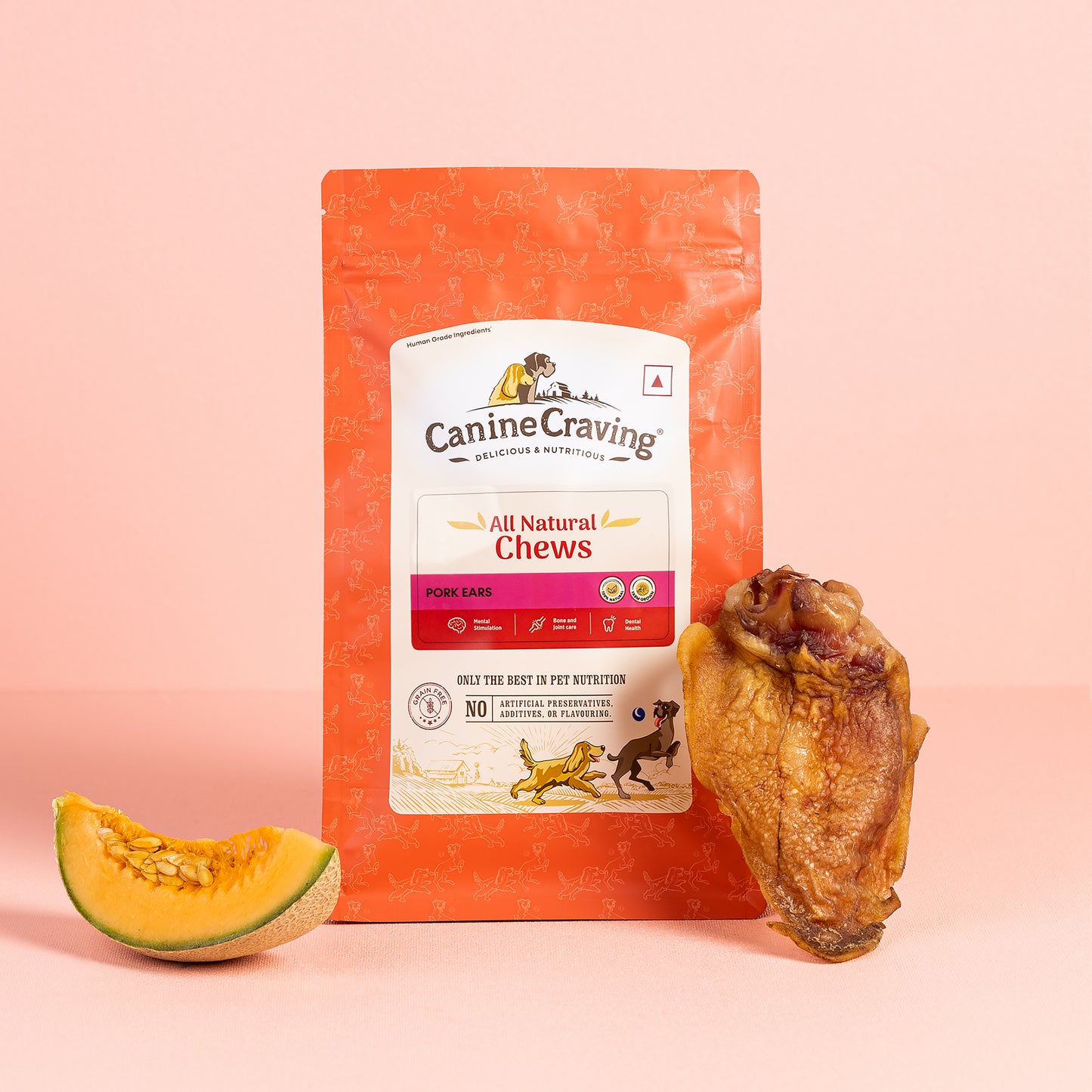
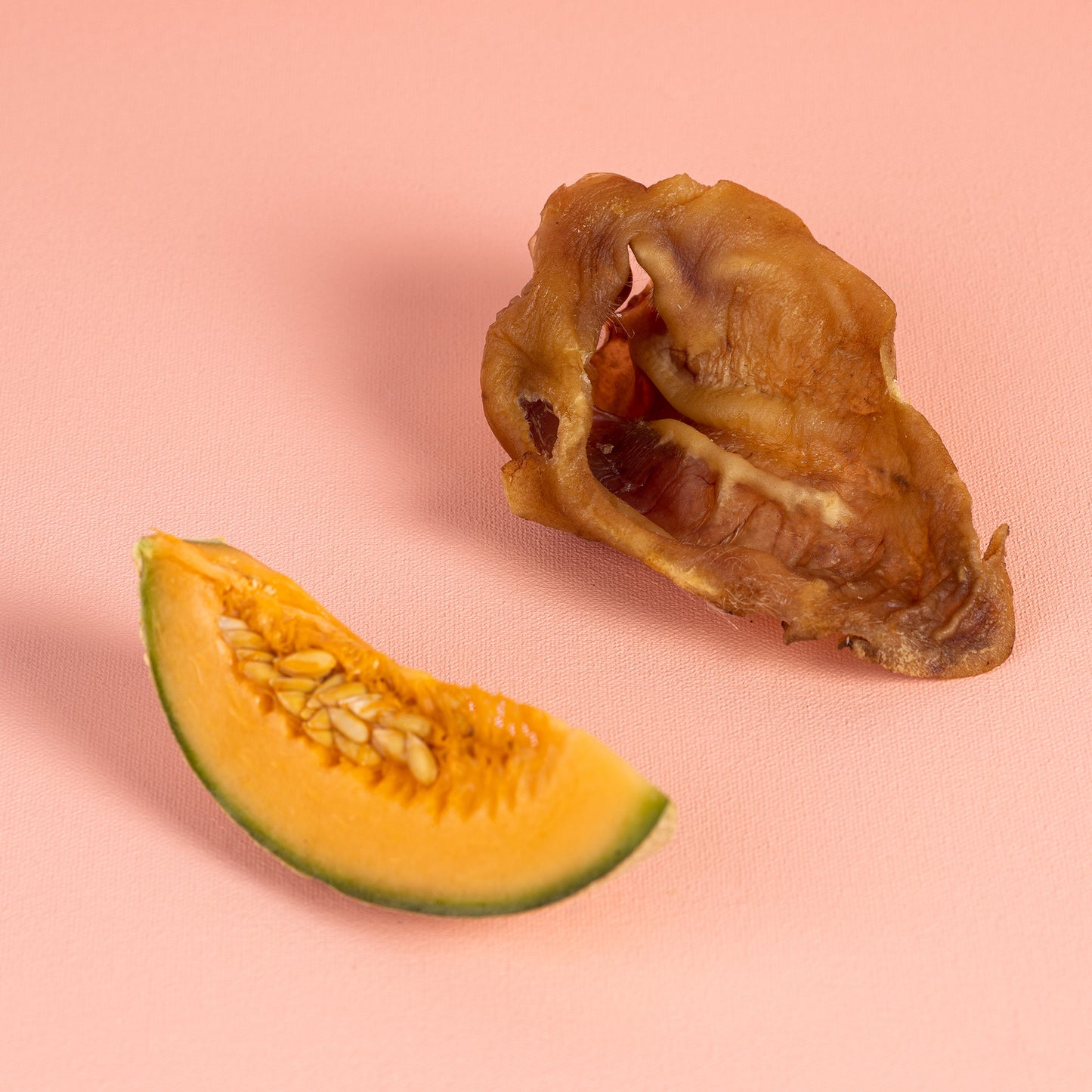
Canine Craving’s Pork Ear for Dogs is designed with that mindset. Instead of highly processed snacks, it starts with farm-grown pork ears that are gently dehydrated to preserve their natural flavour and nutrients. No artificial additives. No unnecessary fillers.
The result is a chewy texture dogs instinctively enjoy. Our dehydrated pork ear for dogs keeps them engaged for longer, while the natural chewing action can help support dental hygiene. The treat is not just a reward; but a choice that quietly supports the wellbeing of your dog.
Key Features:
-
100% natural
-
Farm-grown ingredients with no artificial additives
-
Grain-free and species appropriate chew
-
Slowly dehydrated for complete flavours and nutrition
-
Lasting chew that supports natural chewing instincts
Benefits:
-
Supports Dental Health: The chewy texture helps reduce plaque and tartar through natural chewing.
-
Provides Mental Stimulation: Chewing keeps dogs entertained and mentally engaged; reducing boredom and destructive behaviour.
-
High-Protein Natural Treat: It provides natural protein and nutrients that support muscle health and energy.
-
Encourages Natural Chewing Behaviour: Dogs instinctively chew, and these ears provide a safe and satisfying outlet for that instinct.
Feeding Guide:
- Day 1: Introduce One Piece. Choose a Place & Time Where the Dog Can Be at Peace Without Disruption
- Day 2: Break from Chewing, Observe for Any Digestive Intolerance. Do Not Feed Anything New on Day 1 & 2 to Avoid Digestive Disruption
- Day 3 Onwards – If All Goes Well, Offer Up to 1 Piece Every Day or As Suitable
- Always Dispose the Leftover Pieces (If Any)
Ingredients(Food & Treats):
Pork, Parsley
Storage Instruction:
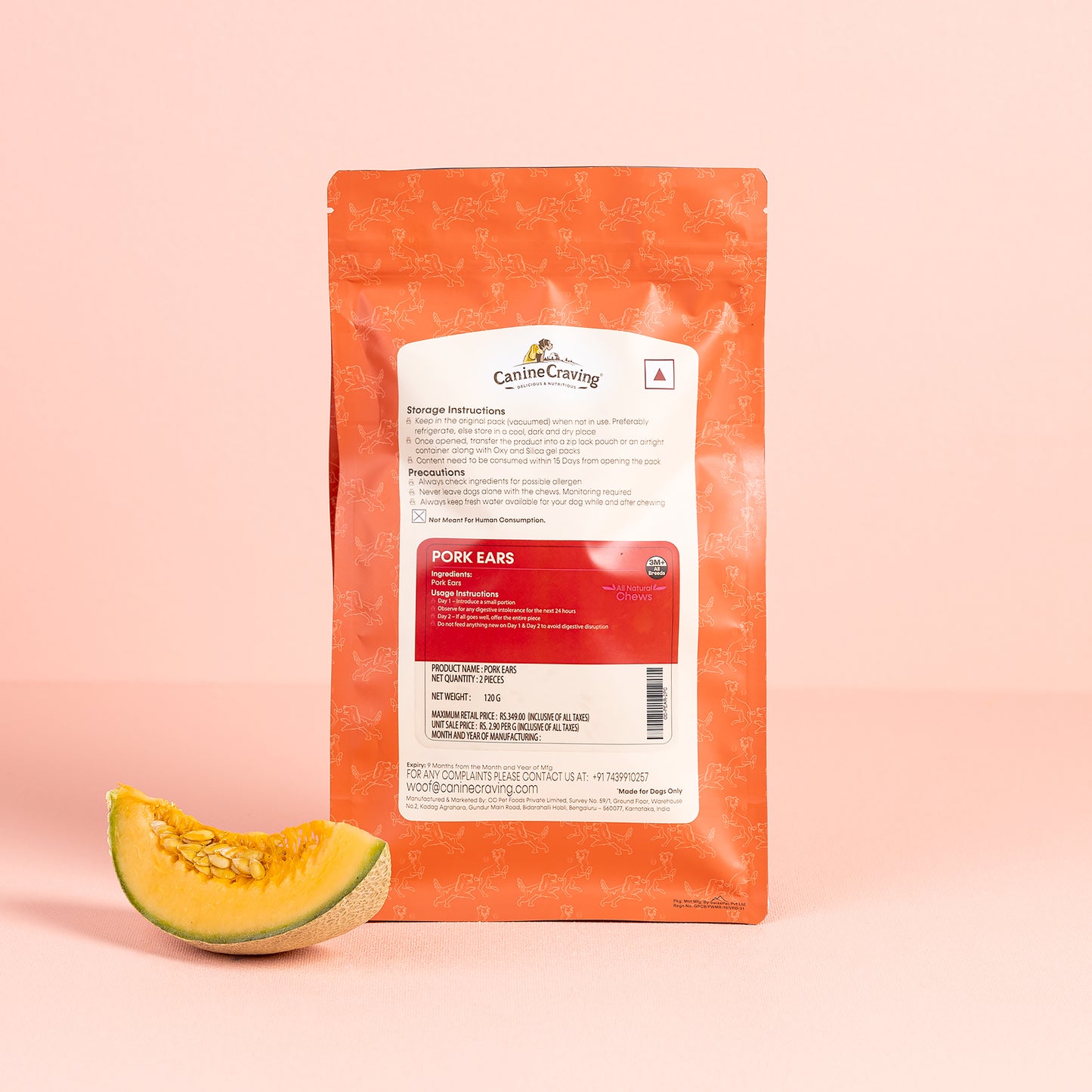
- Keep in the Original Pack (Vacuumed) When Not in Use. Preferably Store in the Refrigerator, Else in a Dark, Cool & Dry Place at All Times
- Once Opened, Transfer the Content in a Zip Pouch / Air-Tight Container Along with Gel Packs
- Preferably Store in the Refrigerator, Else in a Dark, Cool & Dry Place at All Times
- Consume Within 15 Days After Opening the Pack
Precaution:
- Always Check Ingredients for Possible Allergen
- Never Leave Dogs Alone with Chews, Monitoring Required
- Always Have Fresh Water Available for Your Pet
Note-: Product colour may vary due to photographic lighting sources or your monitor settings.
Additional Info
Additional Info
FAQs
FAQs
Our Blogs
-

Signs Your Dog May Have Joint Problems (And How...
Key Takeaways Joint problems can begin quietly, with stiffness, hesitation or reduced activity appearing before obvious limping. These changes may indicate joint discomfort or mobility issues and should be considered...
Signs Your Dog May Have Joint Problems (And How...
Key Takeaways Joint problems can begin quietly, with stiffness, hesitation or reduced activity appearing before obvious limping. These changes may indicate joint discomfort or mobility issues and should be considered...
-

Why Does My Dog Have Fleas and How Can I Get Ri...
Key Takeaways Fleas are typically picked up through contact with other animals, long grass, or shared environments, and can now persist year-round in warm UK homes. Watch for scratching, red...
Why Does My Dog Have Fleas and How Can I Get Ri...
Key Takeaways Fleas are typically picked up through contact with other animals, long grass, or shared environments, and can now persist year-round in warm UK homes. Watch for scratching, red...
-

Best High Fibre Dog Foods Recommended by Experts
Key Takeaways High-fibre diets combine soluble and insoluble fibre to support digestion, weight control, and blood sugar regulation. GI issues account for roughly 10-20% of vet visits, making fibre-rich nutrition...
Best High Fibre Dog Foods Recommended by Experts
Key Takeaways High-fibre diets combine soluble and insoluble fibre to support digestion, weight control, and blood sugar regulation. GI issues account for roughly 10-20% of vet visits, making fibre-rich nutrition...
-

7 Health Benefits of Carrots for Dogs
Key Takeaways Carrots offer genuine nutritional value: Vitamin A, Vitamin K, beta-carotene, and fibre, all in one low-calorie snack. Their crunch helps reduce plaque buildup, relevant given up to 90%...
7 Health Benefits of Carrots for Dogs
Key Takeaways Carrots offer genuine nutritional value: Vitamin A, Vitamin K, beta-carotene, and fibre, all in one low-calorie snack. Their crunch helps reduce plaque buildup, relevant given up to 90%...


