Your dog bounds over for a cuddle, gives you a big lick, and suddenly you’re leaning away. Many pet parents brush it off as “just dog breath”. But a strong, unpleasant smell is usually your dog’s way of telling you something is wrong, most often in the mouth and sometimes elsewhere in the body.
So what causes dog bad breath, and how can you freshen it safely at home? Here’s what vets say, which smells need a vet visit, and the simple daily habits that actually help.
Quick answer: Dog bad breath (halitosis) is most often caused by plaque, tartar and gum disease. Less often it points to kidney disease, diabetes, liver problems, a broken tooth or something your dog ate. You can freshen your dog’s breath naturally with regular tooth brushing, supervised natural chews, fresh water and a clean diet. However, a strong or sudden change in smell needs a vet check, because home care cannot fix an underlying problem.
Last updated: 25 November 2026
Is Bad Breath Normal for Dogs?
No. A mild “doggy” smell up close, especially after meals, is normal. Breath that makes you step back is not. According to PDSA, a UK veterinary charity, bad breath is not normal even in older dogs, and a change in your dog’s breath is worth a call to your vet, especially if your dog seems unwell or is eating less.
The medical term for bad breath is halitosis. It is a symptom, not a disease in itself, which means the real goal is finding out what is causing it.
What Causes Bad Breath in Dogs?
Dog bad breath can start in the mouth, the gut or elsewhere in the body. Here are the main causes, starting with the most common.
- Plaque, tartar and gum disease: The American Kennel Club (AKC) names poor oral hygiene and periodontal disease as the most common causes. Bacteria in plaque create the smell, and plaque hardens into tartar if it isn’t removed. Zoetis Petcare notes that as many as 80% of dogs have some form of periodontal disease by the age of two.
- Breed and size: The UC Davis School of Veterinary Medicine says small breeds and flat-faced (brachycephalic) breeds, such as Pugs and Shih Tzus, more often develop periodontal disease.
- Broken or infected teeth and mouth problems: Cracked teeth, abscesses, sore gums and growths in the mouth can all become infected and smell.
- Diet and scavenging: Eating garbage, dead insects or other dogs’ poop (coprophagia) can leave your dog with foul breath, as AKC points out. PDSA adds that some diets, such as fish-based foods, can make breath smellier.
- Kidney disease, diabetes and liver disease: These conditions change body chemistry and can give the breath a distinct smell. They need treatment from a vet.
- Gut and airway problems: PDSA lists gut infections, blockages and bacterial infections in the lungs, sinuses or windpipe as other possible causes.
What Does Your Dog’s Breath Smell Mean?
The type of smell can offer a clue about what’s going on. PetMD explains that kidney problems can make breath smell like ammonia or urine, while diabetes can give it a sweet or acetone-like smell. Use the table below as a guide, not a diagnosis. Only a vet can confirm the cause.
| Smell | Possible cause | What to do |
|---|---|---|
| Rotten or foul | Plaque, tartar, gum disease or an infected tooth | Book a dental check and start home dental care |
| Fishy | Fish-based food or dental disease | Check the teeth first. If the smell is new and persistent, ask your vet to investigate |
| Ammonia or urine-like | Possible kidney disease | See your vet soon |
| Sweet or fruity | Possible uncontrolled diabetes, especially with more drinking and urinating | See your vet promptly |
| Musty or foul-sweet | Possible liver disease | See your vet |
| Poop-like | Eating faeces or a gut problem | Prevent access and see your vet if it continues |
When Should You See a Vet About Dog Bad Breath?
See your vet if your dog’s bad breath doesn’t improve with a few weeks of better dental care, or sooner if you notice any of these signs. Cornell University’s Riney Canine Health Center lists several of them as signs of dental disease.
- Difficulty eating, dropping food or a reduced appetite
- Bleeding from the mouth, swelling on the jaw or face, or heavy drooling
- Red, swollen or bleeding gums, loose or broken teeth, or thick brown tartar
- A sudden change in smell, or breath that smells of ammonia or something sweet
- Increased thirst and urination, weight loss, vomiting or unusual tiredness
Your vet will usually examine the mouth and may recommend bloodwork to look for kidney, liver or metabolic problems. Dental X-rays and a professional cleaning under anaesthesia may follow, because much of dental disease hides below the gumline. Small breeds may need dental care more often, according to AKC.
How to Freshen Your Dog’s Breath Naturally
Here, “natural” means safe everyday habits, not herbs, essential oils or kitchen remedies. These habits work by controlling plaque, the root of most dog bad breath. They work best once your vet has ruled out dental or medical problems.
1. Check your dog’s mouth every week
Gently lift your dog’s lips and look at the teeth and gums. Healthy gums are pink and firm. Red, swollen or bleeding gums, brown tartar near the gumline or a broken tooth all need a vet’s attention.
2. Brush your dog’s teeth with dog toothpaste
Brushing is the most effective home care. A dvm360 veterinary guide calls daily brushing the gold standard for preventing plaque and tartar, and PetMD advises brushing at least every other day, ideally daily.
- Start slowly: Let your dog lick a little dog toothpaste off your finger for a few days.
- Move to a brush: Use a soft dog toothbrush or finger brush and focus on the outer surfaces, where plaque builds up most.
- Keep it positive: Keep sessions short and reward your dog afterwards.
3. Offer supervised natural chews
The scraping action of chewing helps remove soft plaque before it hardens into tartar. Chews support brushing but don’t replace it, because they can’t reach every tooth surface. If you want clinical proof, look for the Veterinary Oral Health Council (VOHC) seal. PetMD explains that VOHC-accepted products must show at least a 20% average reduction in plaque or tartar in trials.
Whichever chew you choose, pick the right size for your dog, supervise every session and keep fresh water nearby.
4. Keep water fresh and bowls clean
Fresh water helps rinse food particles from the mouth. Wash your dog’s bowl daily so bacteria don’t build up on it. If your dog drinks less in cold weather, our guide on a dog not drinking water in winter has easy ways to encourage it.
5. Clean up the diet and stop scavenging
Skip table scraps and leftovers, and keep the bin out of reach. If your dog eats poop, tackle that habit with training and by cleaning up quickly, and speak to your vet if it continues. Our guide to food for dogs in winter explains how to build a balanced diet.
6. Book regular dental check-ups
Even with great home care, your dog needs a dental exam at least once a year. Hardened tartar can’t be brushed off, and only a professional cleaning removes it.
What should you avoid?
- Human toothpaste: It isn’t made to be swallowed. Some products contain xylitol, which is toxic to dogs.
- Essential oils such as tea tree oil: These can be harmful to dogs.
- Baking soda and other kitchen remedies: Dogs swallow toothpaste, so these aren’t generally recommended. Ask your vet first.
- Very hard chews: They can crack teeth. Avoid anything your dog can’t easily bend or dent.
- Unsupervised chewing: Never leave your dog alone with a chew.
The table below sums up a simple routine.
| Habit | How often | Why it helps |
|---|---|---|
| Tooth brushing | Daily, or at least every other day | Removes plaque, including along the gumline |
| Natural chews | As per the feeding guide, supervised | Chewing action helps scrape plaque from tooth surfaces |
| Fresh water and clean bowl | Daily | Rinses the mouth and limits bacteria on the bowl |
| Mouth check | Weekly | Spots red gums, tartar and broken teeth early |
| Vet dental exam | At least once a year | Finds problems below the gumline |
Natural Dental Chews from Canine Craving
If you’d like to add chews to your dog’s routine, these single-ingredient, grain-free chews are gently dehydrated and described as supporting dental hygiene through natural chewing. Browse the full range in our natural dog chews collection.
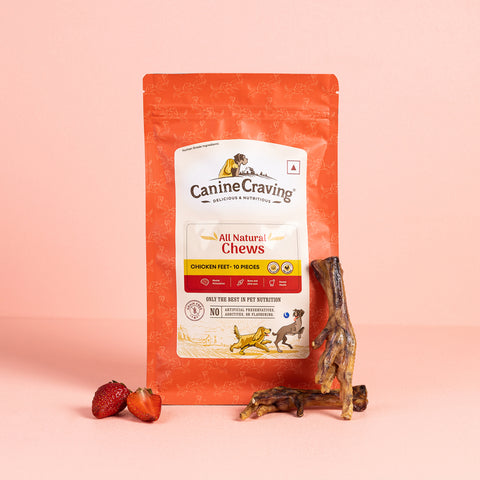
- Chicken Feet (10 pieces): Crunchy, farm-sourced chews made with chicken and parsley, and a good starter chew for most dogs.
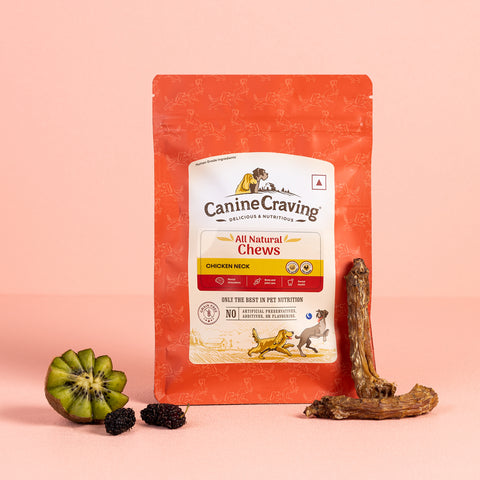
- Chicken Neck (70 g): A single-protein chew that gives your dog a longer chewing session.
Introduce one piece on day 1, give your dog a break on day 2 to watch for any digestive upset, and then follow each product’s feeding guide. Always supervise, and ask your vet before offering chews if your dog has a broken tooth or advanced gum disease.
Key Takeaways: Dog Bad Breath
Here’s a quick recap before you act on your dog’s bad breath.
- Bad breath is not normal in dogs, even older ones. It is a symptom, not a disease.
- The most common cause is plaque, tartar and gum disease.
- Ammonia-like breath can point to kidney disease, and sweet or fruity breath can point to diabetes. Both need a vet.
- Brushing is the most effective home care, and supervised chews can support it.
- Avoid human toothpaste, xylitol, essential oils and very hard chews.
- Book a dental check-up at least once a year, and sooner if the smell changes suddenly.
A fresher breath isn’t just about nicer cuddles. It’s often the first sign that your dog’s mouth and overall health are well looked after.
Frequently Asked Questions About Dog Bad Breath
Why does my dog’s breath smell so bad?
The most common reason is a build-up of plaque and tartar, which can lead to gum disease. Other causes include a broken or infected tooth, eating garbage or poop, and conditions such as kidney disease, diabetes or liver disease. If the smell is strong or sudden, see your vet.
How do I get rid of my dog’s bad breath at home?
Brush your dog’s teeth with dog toothpaste, offer supervised chews, keep fresh water available and avoid table scraps. These steps control plaque but cannot treat a medical cause, so check with your vet if the smell doesn’t improve.
Is bad breath in dogs a sign of kidney disease?
It can be. Kidney problems may cause breath that smells like ammonia or urine. This is less common than dental disease, and it usually comes with other signs such as increased thirst, weight loss or poor appetite. See your vet if you notice an ammonia-like smell.
Why does my dog’s breath smell fishy?
Fish-based food and dental disease are common reasons. If the fishy smell is new and doesn’t go away, ask your vet to check your dog’s teeth and overall health.
Do dental chews really work for dog bad breath?
Chews can help reduce plaque through the scraping action of chewing, which may help keep breath fresher. They support brushing rather than replacing it. For clinically tested products, look for the VOHC seal.
How often should I brush my dog’s teeth?
Daily is ideal. If that isn’t possible, aim for at least every other day. Use only dog toothpaste, and never human toothpaste.
Do small dogs have worse breath?
Small and flat-faced breeds are more prone to periodontal disease, which is the most common cause of bad breath, so they often need more dental care. Any dog can develop bad breath without good oral hygiene.


